

Many women only think about booking a visit when something feels wrong. You might feel completely fine, but still wonder whether you are due for a routine review, a screening test, or a follow-up for something that was checked before. If you are looking for broader support, a women’s clinic can also help you understand what kind of care may be relevant at your stage of life.
That uncertainty is common. It is not always clear how often you should go, whether timing changes with age or life stage, or when a past concern means you should return sooner even without new symptoms.
This guide explains how routine women’s health check-ups usually work, what can affect how often you go, how screening intervals may shape your timing, and when follow-up visits may matter.
Why Routine Women’s Health Check-Ups Matter
It is easy to think a women’s health visit only matters when you have pain, unusual bleeding, or another obvious concern. In reality, routine check-ups can still be useful even when you feel well. They give you a chance to stay on top of your health before something becomes harder to notice, explain, or manage.
A routine review can help you keep track of screening, talk through contraception, plan for pregnancy, or discuss changes linked to different life stages. It can also be a good time to revisit any past issue that may need monitoring, even if it is not causing new symptoms now. That kind of continuity can make care feel more organised and less reactive.
These visits also give you space to ask questions that might otherwise be put off. You may want clarity on your cycle, sexual health, fertility planning, menopause, or whether you are due for any preventive tests. A women’s clinic appointment can help you understand what is relevant for your needs, rather than relying on guesswork.
Routine care is not about assuming something is wrong. It is about giving yourself a clearer, more structured way to stay informed about your health over time.
How Often Should You Have a Women’s Health Check-Up
There is no single schedule that suits every woman. How often you should have a women’s health check-up depends on your age, stage of life, medical history, sexual health needs, and whether you are due for any screening or follow-up.
For some women, a routine review may simply be worth considering from time to time to stay on top of preventive care, especially if there are questions about contraception, fertility plans, menopause, or general reproductive health. For others, timing may be shaped more clearly by screening schedules, past results, or a condition that is already being monitored.
This is why it helps to think about routine check-ups in a more personal way rather than assuming you should go on a fixed yearly basis. If you are due for cervical screening, need to review contraception, are planning a pregnancy, or have previously been told to return for follow-up, your ideal timing may be different from someone else’s.
A routine visit can also be useful when your needs change, even if you do not have active symptoms. What matters most is whether there is a reason to review, screen, reassess, or follow up based on your current stage of life and health needs.
Doctor’s Insights: There is no single check-up schedule that suits every woman. Timing often depends on your age, screening history, sexual and reproductive health needs, and whether there is anything that already needs follow-up. A routine visit should reflect what is relevant to you, rather than follow a fixed timetable without context.
– Dr. Michelle Chia, Ezra Clinic
If you are unsure how often you should be seen, a women’s clinic consultation can help you decide what timing makes sense for you.
How Check-Up Timing Can Change by Age and Life Stage

The right timing for a women’s health check-up can change as your needs change. A routine visit in one stage of life may focus more on prevention and screening, while in another it may centre on contraception, pregnancy planning, or follow-up during menopause.
General Routine Care During Adulthood
During adulthood, routine check-up timing is often shaped by your general preventive care needs. This may include whether you are due for cervical screening, want to review your menstrual health, or simply have questions about your reproductive health even when nothing feels obviously wrong.
Check-Ups When You Are Sexually Active or Reviewing Contraception
If you are sexually active, your timing may also depend on contraception and sexual health needs. A visit can be useful when you want to review your current birth control method, discuss side effects, talk about sexual health screening, or make sure your care still suits your circumstances.
Check-Ups When Planning Pregnancy
If you are planning to conceive, it can help to book a review before trying for pregnancy. This gives you a chance to talk about your cycle, ovulation, supplements, medical history, and any factors that may affect fertility. If this is relevant to you, you can also read more about premarital screening and preconception screening.
Review During Pregnancy and After Birth
During pregnancy and after birth, care usually becomes more structured. Appointments may be guided by antenatal care, postnatal recovery, feeding plans, contraception decisions, and any concerns that need ongoing review after delivery.
Review During Perimenopause and Menopause
Check-up timing may also change during perimenopause and menopause. This is often when women want to discuss cycle changes, vaginal dryness, sleep disruption, contraception, or wider health considerations linked to this life stage.
Rather than following one fixed routine throughout life, it is more useful for your check-up timing to reflect what is relevant to you at that stage.
Doctor’s Insights: The reason for a women’s health review often changes over time. At one stage, the focus may be contraception or screening. At another, it may be fertility planning, sexual health related consult, or menstrual cycle review. This is why check-up timing should be guided by your current stage of life, not just by habit.
– Dr. Michelle Chia, Ezra Clinic
Screening Intervals That May Shape Your Check-Up Schedule
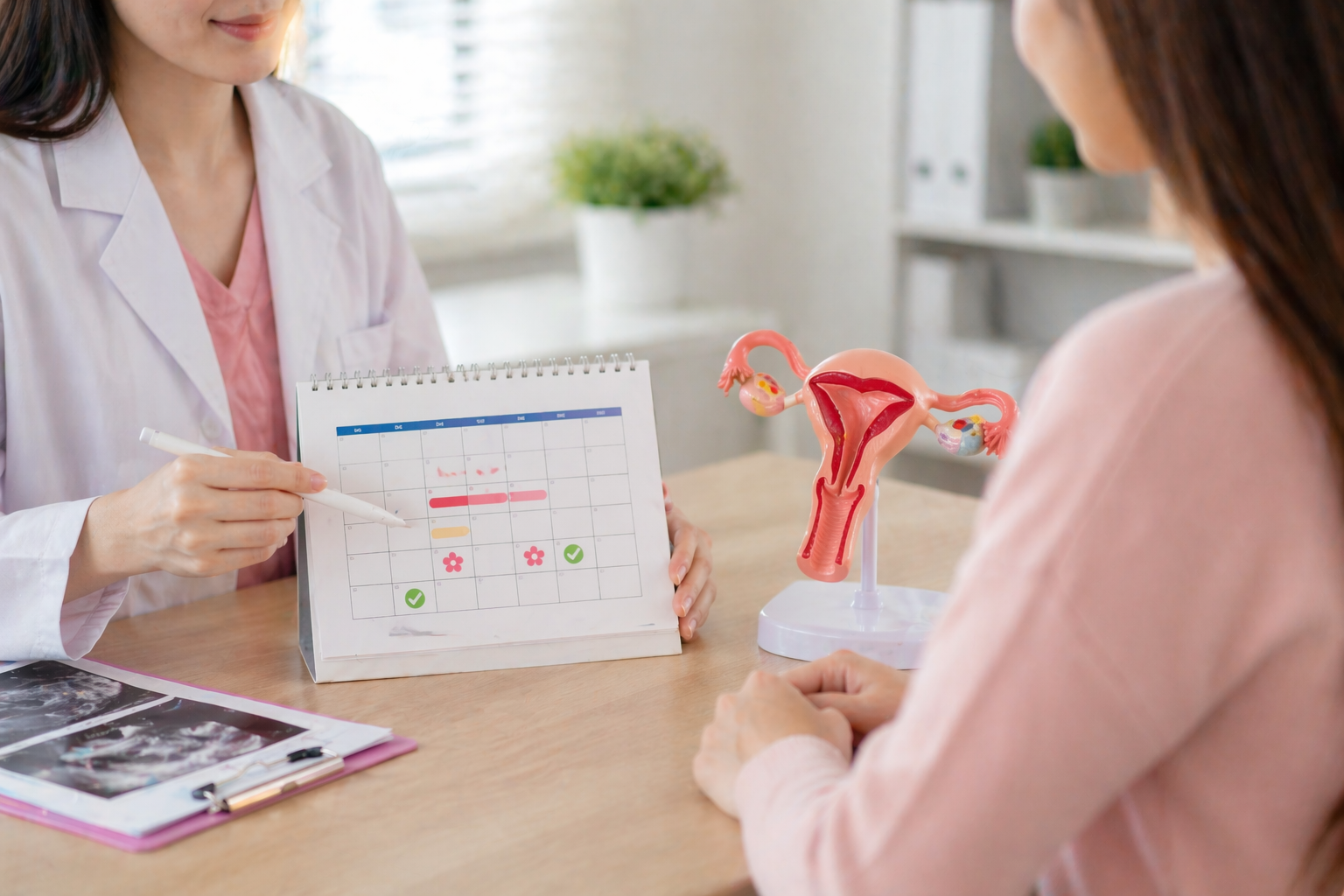
Routine women’s health visits are not always booked on a fixed calendar basis. In many cases, timing is shaped by whether you are due for a screening test, whether your circumstances have changed, or whether a doctor has advised follow-up after a previous result.
Cervical Screening May Influence When You Book
One of the clearest examples is cervical screening. If you are due for a Pap smear or an HPV test, this may naturally shape when you book your next check-up. Even if you feel well, screening can still be important because it looks for changes before they cause obvious symptoms. If you want to understand how these two tests differ, you can also read more about Pap smear vs HPV test.
Sexual Health Screening May Be Relevant at Certain Times
Sexual health screening is another example. The timing may depend on changes in your sexual history, a new partner, concerns about exposure, or a wish for reassurance. This does not mean every routine visit needs STD testing, but it does mean that your check-up schedule may sometimes be shaped by your situation rather than by a standard yearly pattern.
Screening Timing Is Not the Same for Everyone
This is why routine care is best viewed as personalised rather than fixed. Your schedule may be shaped by the screenings you are due for, the reviews you need, and the stage of life you are in.
Doctor’s Insights: Many women book routine visits when they are due for screening, even if they feel completely well. Cervical screening and sexual health testing are examples of preventive checks that may shape when review happens. In practice, screening timing often helps guide the rhythm of routine care.
– Dr. Michelle Chia, Ezra Clinic
When Follow-Up Should Happen for Known Concerns
Not every return visit happens because of a new symptom. In some cases, follow-up matters because something has already been identified, reviewed, or treated, and the next step is to check whether things have settled, stayed stable, or need further attention.
Follow-Up After Screening or Test Results
If you have had a previous screening result that needs review, your next visit may need to happen sooner than a routine check-up. This can happen after cervical screening, sexual health testing, or another result that needs monitoring or repeat assessment. In these situations, timing is usually guided by the result itself rather than by a general preventive schedule.
Follow-Up for Cycle, Hormone, or Fertility-Related Concerns
Follow-up can also matter when you are already being reviewed for cycle changes, hormone-related concerns, or fertility planning. For example, if your periods have been irregular, if you are being assessed for polycystic ovarian syndrome, or if you have been advised to return for fertility screening, it is useful to follow the suggested timing rather than wait until something feels more disruptive. If cycle changes are part of the picture, you can also read more about irregular periods and when they may need review.
Follow-Up After Treatment or Ongoing Monitoring
Sometimes a follow-up visit is simply part of good continuity of care. You may have started treatment, completed a course of medication, or been advised to return to see whether a concern has improved. Even when symptoms are mild or no longer obvious, planned review can still be important because it helps confirm what has changed and what should happen next.
This is why follow-up timing should not be treated as optional when a doctor has already advised review. It is part of making sure known concerns are properly monitored rather than left uncertain.
Doctor’s Insights: Follow-up matters because a previous result, finding, or concern may still need review even when symptoms are no longer obvious. If you have been advised to return after screening, treatment, or monitoring, it is usually best to keep to that timing so your care is not left uncertain or incomplete.
– Dr. Michelle Chia, Ezra Clinic
What May Be Reviewed During a Routine Women’s Health Visit
A routine women’s health visit does not always mean you will need an examination or a long list of tests. In many cases, the appointment starts with a conversation about your health, your stage of life, and whether there is anything that should be reviewed, monitored, or planned.
Your Medical, Menstrual, and Reproductive History
A doctor may ask about your periods, past medical issues, contraception, sexual health, pregnancies, and any previous test results. This helps build a clearer picture of your health over time and makes it easier to decide whether any screening, follow-up, or further discussion is needed.
Screening, Fertility, or Menopause Discussions
A routine visit can also be a good time to talk through preventive care. You may want to ask whether you are due for screening, whether your contraception still suits you, whether you should prepare for pregnancy in a different way, or whether changes linked to perimenopause or menopause need review.
Whether an Examination or Test Is Appropriate
Not every routine appointment includes a physical examination or test. What happens next depends on the reason for the visit, your history, and whether there is anything specific that needs checking. If you want more personalised guidance on what may be relevant for you, a routine consultation can help clarify the next steps.
A routine review is often less about doing everything at once and more about making sure the right topics are discussed at the right time.
When a Routine Check-Up Becomes a Symptom-Based Visit
A routine check-up is usually about planned care, screening, or follow-up. However, if you already have a new symptom, a change that keeps happening, or something that feels unusual for your body, the visit is no longer only about routine review.
This matters because symptoms often need a different kind of assessment. Instead of focusing mainly on preventive care or timing, the appointment may need to look more closely at what has changed, how long it has been happening, whether it is getting worse, and what kind of examination or test may be needed.
For example, this shift can happen if you have unusual bleeding, recurring discharge, pelvic pain, urinary discomfort, pain during sex, or other changes that do not feel normal for you. In that situation, it makes more sense to approach the visit as a symptom-led review rather than a standard routine check-up.
Doctor’s Insights: A routine check-up is meant for planned review, prevention, or follow-up. Once you have a new symptom or a notice any abnormal symptoms that keeps happening, the visit may need a different kind of assessment. That distinction matters because symptom-led consultations often need a more focused review of what has changed and why.
– Dr. Michelle Chia, Ezra Clinic
If that sounds more like your situation, you can read more about women’s health symptoms and when to see a doctor and get checked. Knowing the difference can help you book the right type of review for what your body may need.
Conclusion
Routine women’s health check-ups are not based on one fixed timetable for everyone. The right timing can depend on your age, life stage, screening schedule, and whether anything already needs follow-up.
That is why routine care is less about attending out of habit and more about knowing when a review makes sense for you. Even without symptoms, a planned visit can help you stay on top of preventive care and make informed decisions at the right time.
If you want more personalised guidance, you can consider booking a consultation at a women’s clinic.
References:
- HealthHub Singapore. National Health Screening Programme – Screening Journey. Available at: https://www.healthhub.sg/programmes/healthiersg-screening/screening-journey
- HealthHub Singapore. FAQs on HPV and HPV Immunisation. Available at: https://www.healthhub.sg/health-conditions/faqs-on-hpv-and-hpv-immunisation
- HealthHub Singapore. Sexually Transmitted Infections. Available at: https://www.healthhub.sg/programmes/sexually-transmitted-infections
- American College of Obstetricians and Gynecologists. Well-Woman Visit. Available at: https://www.acog.org/clinical/clinical-guidance/committee-opinion/articles/2018/10/well-woman-visit
- American College of Obstetricians and Gynecologists. The Utility of and Indications for Routine Pelvic Examination. Available at: https://www.acog.org/clinical/clinical-guidance/committee-opinion/articles/2018/10/the-utility-of-and-indications-for-routine-pelvic-examination