
You might notice something feels off, but you are not sure if it is serious enough to get checked. Maybe your period has changed, you have unusual discharge, or there is discomfort that keeps coming back. It is easy to ignore these signs, especially when they seem mild or temporary.
The challenge is knowing what is normal for your body and what is not. Many women wait until symptoms become more disruptive before seeking help, which can delay proper assessment and care.
This guide will help you understand when symptoms, changes, or concerns should prompt a visit to a women’s health clinic in Singapore. You will learn how to recognise patterns that matter, which signs should not be ignored, and when it is worth getting checked.
How to Tell When a Symptom Is Worth Checking
Not every change means something is wrong, but some changes are worth paying closer attention to. A symptom is usually worth checking when it does not go away, keeps coming back, gets worse, or starts to affect your daily life.
You should also take notice when something feels different from your usual pattern. That could mean your periods suddenly become heavier, discharge changes in colour or smell, or pelvic discomfort starts happening more often. Even if the symptom seems mild, a repeated change can still be a sign that your body needs attention.
Another useful guide is how much the symptom affects you. If it disrupts your sleep, work, exercise, sex life, comfort, or peace of mind, it is no longer something to simply brush aside. The same applies if you find yourself self-treating again and again without lasting relief.
If you are unsure what to expect during an appointment, it can help to understand how a women’s health consultation usually works and what may be discussed during the visit. A review does not always mean something serious is wrong, but it can help you understand what is happening and what to do next.
Doctor’s Insight: A symptom does not need to be severe before it deserves attention. In practice, the pattern often matters more than intensity. If an abnormal symptom is recurrent, lasts longer than expected, or starts affecting your comfort or daily routine, that is usually a good reason to have it reviewed.
It is always better to have any issues addressed early to avoid more complicated treatments in the future.
– Dr. Michelle Chia, Ezra Clinic
Menstrual Changes That Should Prompt a Visit
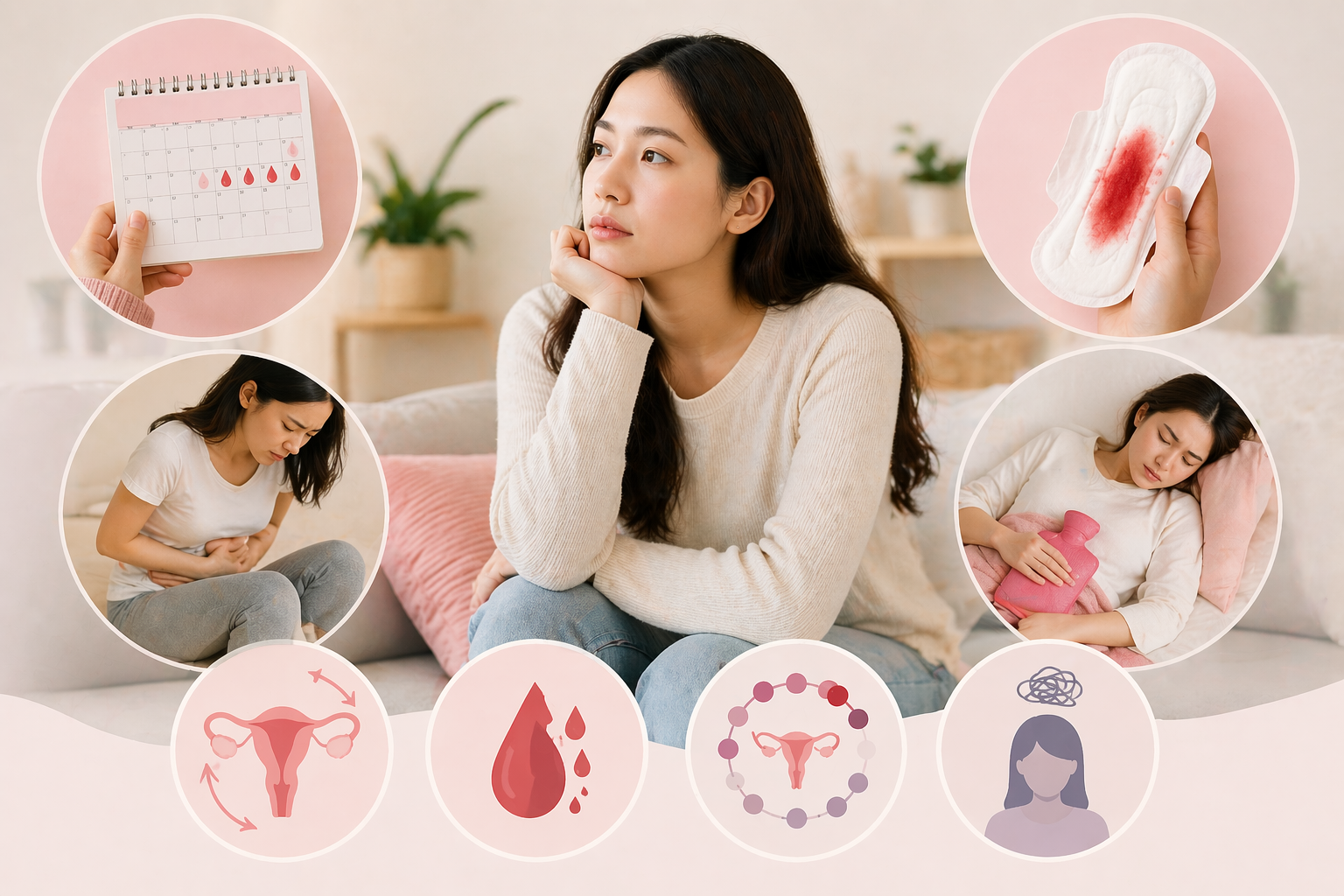
Your period can change slightly from time to time, but some changes should not be dismissed. A visit is worth considering when your cycle becomes noticeably different from what is normal for you, especially if the change lasts for more than one or two cycles.
Irregular periods are one of the most common reasons to seek review. This can mean your periods start coming much earlier, much later, or become difficult to predict. Missed periods without an obvious reason also deserve attention, particularly if this is unusual for you.
Heavy bleeding is another sign to take seriously. If you are soaking through pads or tampons quickly, passing large clots, bleeding for longer than usual, or finding that your period disrupts work, sleep, or daily activities, it is worth getting checked. The same applies if your cramps become more severe than usual or start affecting your ability to function normally.
Bleeding between periods or after sex should also not be ignored. These changes do not always point to a serious problem, but they do need proper assessment, especially if they happen more than once.
Doctor’s Insight: Many women assume heavy bleeding, severe cramps, or irregular periods are just something they have to put up with. These symptoms may be common, but they are not always something you should ignore. When your cycle becomes noticeably different from your usual pattern, it is important to consult a doctor to ensure there is no serious underlying cause.
– Dr. Michelle Chia, Ezra Clinic
If your cycle has changed and you are not sure what it means, you can also read more about irregular periods and when changes in your cycle need medical attention. A review can help identify whether the cause is hormonal, structural, infection-related, or linked to another underlying issue.
Vaginal Symptoms That Should Not Be Ignored
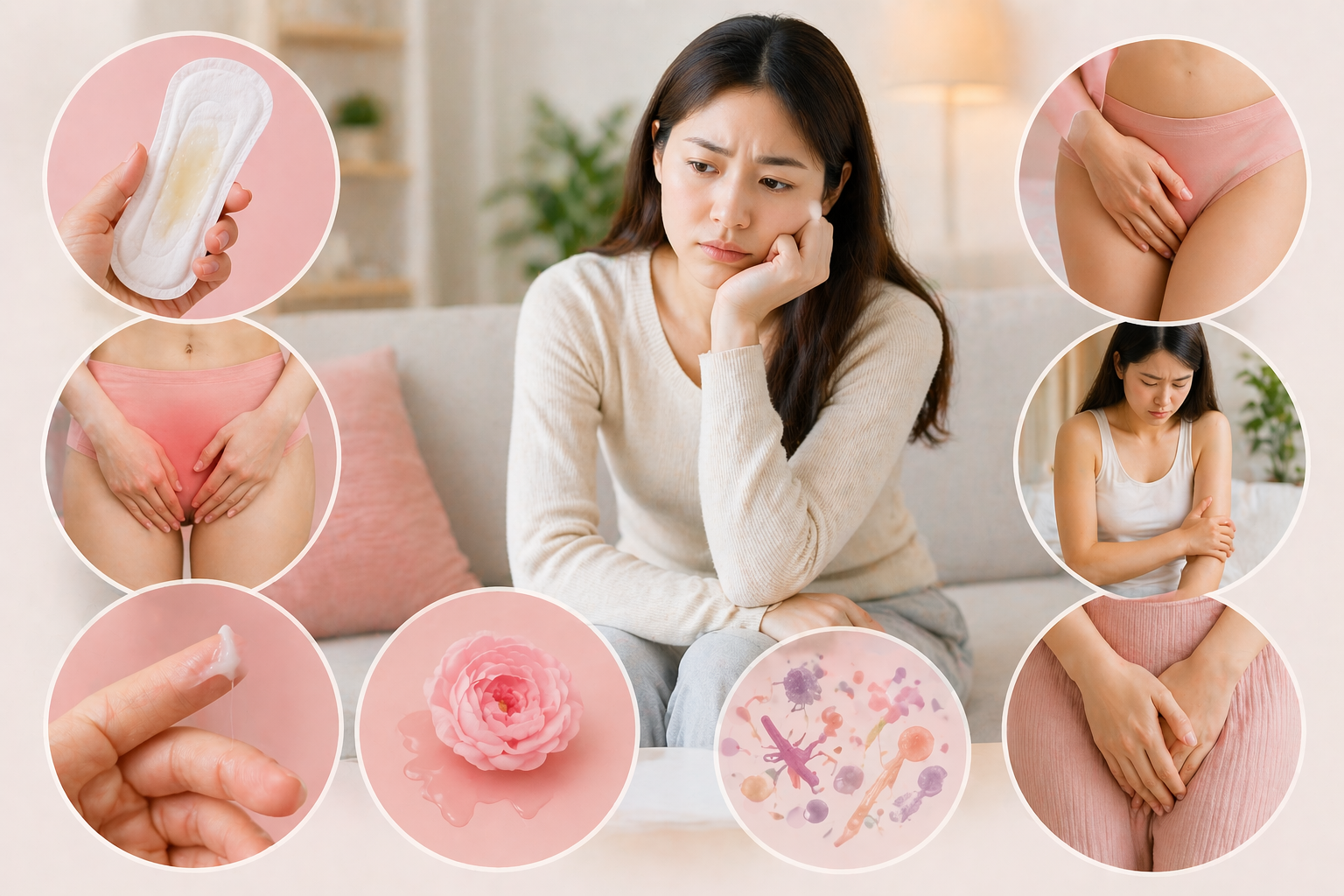
Vaginal symptoms are common, but that does not mean you should always wait them out. A change is worth checking when it feels unusual for you, keeps coming back, or does not improve with basic self-care.
Unusual discharge is one of the clearest examples. You may notice a change in colour, texture, amount, or smell. Some changes can happen during different parts of your cycle, but discharge that becomes persistently strong-smelling, noticeably different, or paired with discomfort should not be ignored.
Itching, burning, soreness, and irritation also deserve attention, especially if they recur or start interfering with daily comfort. The same applies if sex becomes uncomfortable, the skin feels more sensitive than usual, or symptoms return soon after treatment. Repeated self-treatment without knowing the cause can delay proper care and may not solve the problem.
Vaginal dryness can also be worth discussing, particularly if it causes discomfort, irritation, or pain during sex. While it is often linked to hormonal changes, it can affect women at different life stages.
Doctor’s Insight: Recurring itching, discharge, odour, or irritation is often a sign that the cause needs to be identified properly rather than repeatedly self-treated. Different conditions can look similar at first, so treatment that seems to help temporarily may not address the actual reason the symptoms keep coming back.
– Dr. Michelle Chia, Ezra Clinic
If you are dealing with recurring symptoms and are not sure what they mean, you can also read more about vaginal infections and when recurring symptoms need medical treatment. A proper review can help identify whether the cause is related to infection, irritation, hormone changes, or another underlying issue.
Pelvic Pain, Urinary Symptoms and Intimate Discomfort
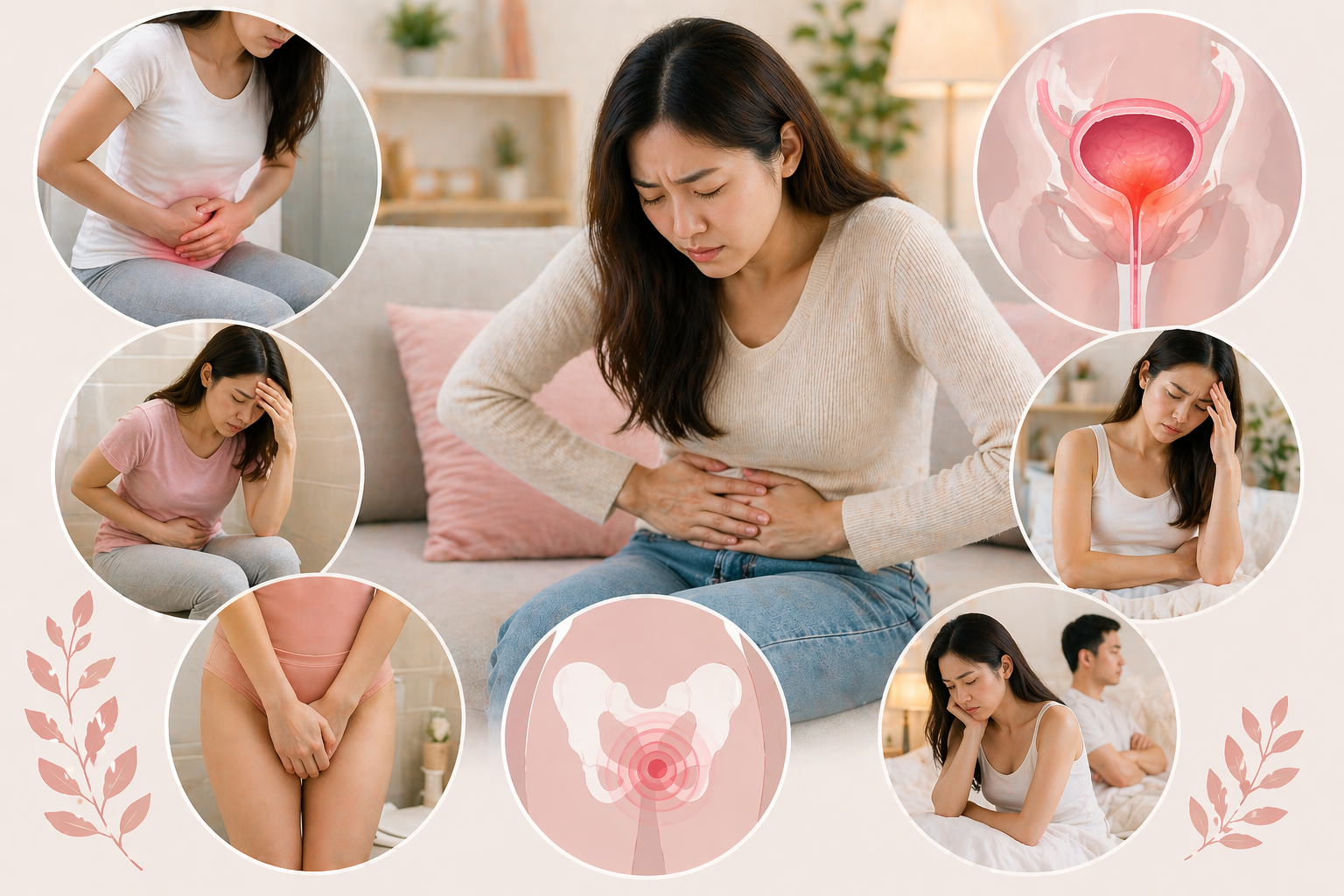
Pain is one of the clearest signs that something should be checked. Even when it comes and goes, pelvic discomfort is not something you should feel forced to manage on your own, especially when it starts affecting your routine or keeps returning.
Pelvic pain can feel sharp, dull, heavy, cramp-like, or difficult to describe. You may notice it during your period, between periods, during sex, or at random times in the month. Some women also feel pelvic pressure, bloating, or a sense that something does not feel quite right in the lower abdomen. When pain becomes recurrent, more intense, or harder to ignore, it is worth getting assessed.
Urinary symptoms can also point to a problem that needs review. Burning when you pass urine, needing to go more often, a strong sense of urgency, or discomfort that keeps returning may not always be a simple urinary tract infection. When urinary symptoms happen alongside pelvic discomfort, vaginal symptoms, or pain during sex, it is especially important not to dismiss them.
Pain during sex is another symptom worth taking seriously. Discomfort with penetration, deeper pain, or soreness afterwards can sometimes reflect dryness, irritation, pelvic floor tension, or an underlying condition affecting the reproductive organs. If intimacy has become uncomfortable, there may be a medical reason behind it.
A proper assessment can help identify whether the cause is related to infection, inflammation, hormone changes, or another underlying issue.
Hormonal and Fertility-Related Signs That May Need Review
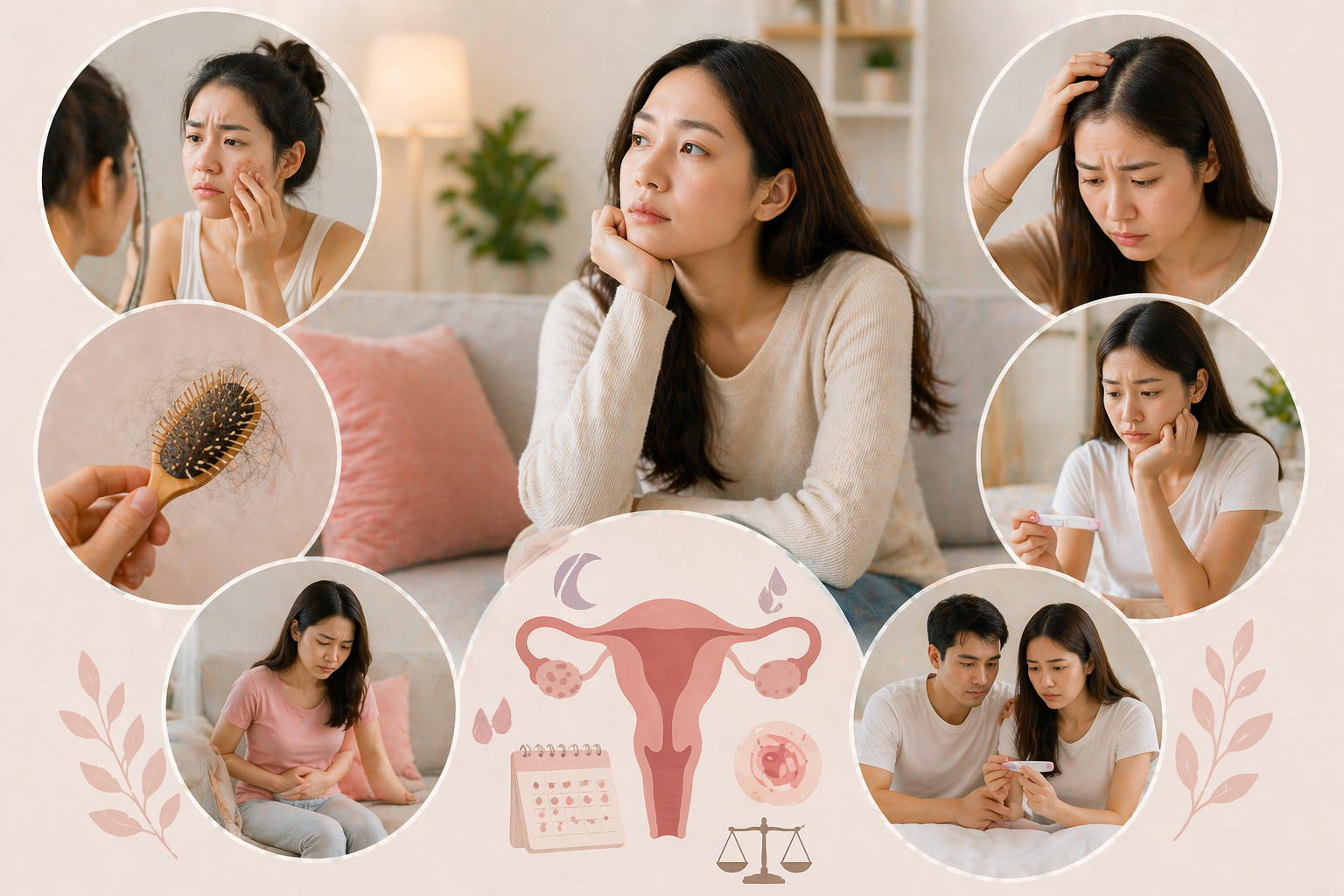
Some symptoms are easy to overlook because they do not seem directly linked to your reproductive health at first. You may notice changes in your skin, hair, or cycle, or find that you have been trying to conceive without success. These can still be signs that your hormones need closer review.
Irregular or missed periods are one common clue, especially when they happen alongside other changes. You might also notice acne that keeps flaring beyond your teenage years, increased facial or body hair, or thinning hair on the scalp. When these symptoms appear together, they can point to an underlying hormone-related issue rather than separate problems.
Difficulty getting pregnant can also be a reason to seek help, particularly if your periods are unpredictable or you are not sure whether you are ovulating regularly. Ovulation is when your ovary releases an egg. If this does not happen consistently, it can affect both your cycle and your chances of conception.
If you are noticing a combination of cycle changes, hormone-related symptoms, or fertility concerns, you can also read more about [PCOS and fertility, including ovulation and when to seek help]. A review can help identify whether the cause is linked to ovulation, hormone imbalance, or another underlying condition.
When to Visit Even If You Do Not Have Symptoms
Not every women’s health visit starts with pain, discomfort, or a visible change. Some appointments matter because they help you stay on top of your health before a problem becomes harder to spot or manage.
Screening is one example. Cervical screening, which may include a Pap smear or Human Papillomavirus (HPV) test, can help check for cell changes even when you feel completely well. The same applies to sexual health screening, especially if your circumstances have changed or you want reassurance.
A visit can also be useful if you want to review contraception, prepare for pregnancy, or talk through changes linked to perimenopause or menopause. These are not problems you need to wait out. They are valid reasons to seek medical advice and make informed decisions about your health.
If you want to understand more about preventive checks, you can also read about Pap smear and HPV testing in Singapore, including when and why women should get checked. Even without symptoms, a review can give you clarity, reassurance, and the right next step for your stage of life.
Signs You Should Seek Medical Attention Sooner
Some symptoms should not wait for a routine appointment. If something feels severe, sudden, or clearly different from your usual pattern, it is better to seek medical attention sooner rather than hope it settles on its own.
Heavy bleeding is one example, especially if it feels difficult to control, comes with dizziness, or leaves you feeling weak. Severe pelvic pain also needs prompt review, particularly when it starts suddenly, becomes intense, or is paired with nausea, fever, or unusual bleeding.
You should also act sooner if bleeding happens during pregnancy, after menopause, or after sex and keeps recurring. These symptoms do not always mean something serious is wrong, but they do need proper assessment without unnecessary delay.
A high fever with pelvic pain, worsening abdominal discomfort, or symptoms that are rapidly becoming more intense should also not be ignored. When symptoms feel urgent, severe, or out of character for your body, getting checked earlier is the safer step.
Doctor’s Insight: Symptoms such as very heavy bleeding, sudden severe pelvic pain, fever with pain, or bleeding when you are not on your period should not be left to monitor for too long. Even when the cause turns out not to be serious, earlier assessment helps make sure urgent problems are not missed.
– Dr. Michelle Chia, Ezra Clinic
Why It Helps to Get Checked Early

It is common to wait and see if symptoms settle on their own, especially when they seem mild at first. However, when a symptom persists or keeps returning, early review can make a clear difference in how easily it is understood and managed.
Getting checked early helps identify what is causing the change, rather than guessing or repeatedly self-treating. In some cases, the issue may be simple and easy to manage. In others, early detection can prevent symptoms from becoming more disruptive or harder to treat later on.
A consultation also gives you clarity. You can understand what is normal for your body, what needs monitoring, and what steps to take next. This can reduce uncertainty and help you make informed decisions about your health.
If you are unsure whether your symptoms need attention, you can consider speaking to a doctor at a women’s clinic. Early assessment is not about expecting the worst. It is about understanding your body and taking the right next step with confidence.
Conclusion
It is easy to second-guess symptoms, especially when they seem mild or come and go, but changes that persist or feel unusual are worth paying attention to.
Your body often gives early signals when something is not quite right, and recognising these patterns can help you decide when to seek medical advice.
You do not need to wait for symptoms to become severe before taking action, especially when early review can provide clarity and reassurance.
If something feels different, uncomfortable, or ongoing, you can consider visiting a women’s health clinic in Singapore to better understand what is happening and what to do next.
References
- American College of Obstetricians and Gynecologists (ACOG)
Your First Gynecologic Visit
https://www.acog.org/womens-health/faqs/your-first-gynecologic-visit - American College of Obstetricians and Gynecologists (ACOG)
Pelvic Exams
https://www.acog.org/womens-health/faqs/pelvic-exams - National Health Service (NHS)
Vaginal Discharge
https://www.nhs.uk/conditions/vaginal-discharge/ - National Health Service (NHS)
Pelvic Pain
https://www.nhs.uk/conditions/pelvic-pain/ - Mayo Clinic
Menstrual Cycle: What’s Normal, What’s Not
https://www.mayoclinic.org/healthy-lifestyle/womens-health/in-depth/menstrual-cycle/art-20047186 - Cleveland Clinic
When to See a Gynecologist
https://health.clevelandclinic.org/when-to-see-a-gynecologist/